

Nevis trusts and U.S. reporting requirements
Nevis has trust legislation, trustee roles, provider licensing, local tax provisions and information exchange, alongside U.S. reporting.
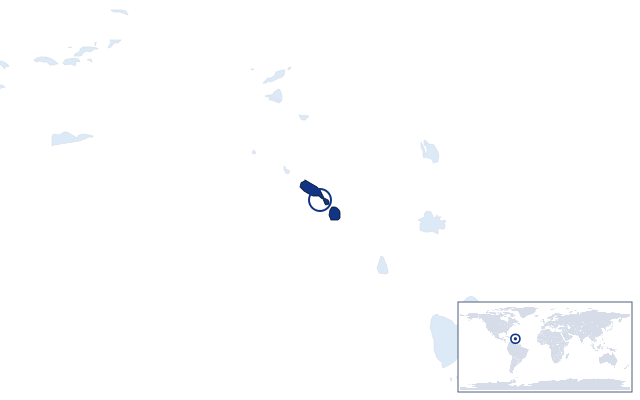
The trust legislation and its organization
The Nevis International Exempt Trust Ordinance establishes a registration framework for international trusts and qualified foreign trusts. Its provisions address governing law and trust purposes, along with administration, registration and tax treatment.[1]
An international trust under the ordinance requires registration and at least one trustee from its specified categories. These include a Nevis corporation, limited liability company, licensed trust company, appropriately licensed attorney or firm, or multiform foundation. The settlor and beneficiaries are required to remain non-resident, and the trust property cannot include real estate in Saint Christopher and Nevis.[1]
The governing-law provisions start with the law expressed in the trust terms or intended by the settlor. Where neither identifies a law, the ordinance uses the trust's closest connection at creation. Nevis law supplies the fallback where the identified law does not provide for the relevant international trust category.[1]
The separate Trusts Act describes a trust as property held by a trustee for beneficiaries, a purpose other than the trustee's sole benefit, or both. Its creation provisions require at least one resident trustee and a Registrar's certificate for recognition under that Act.[2]
Trust arrangements and duration; who does what
The ordinance permits trusts for beneficiaries and trusts for charitable or non-charitable purposes. A trust can combine beneficiary interests with a permitted purpose.[1]
Charitable purposes include education and religion, as well as environmental matters and other community purposes. The statutory definition requires benefit to the community or a substantial section of it, taking account of the purpose's nature. The activity and the community receiving the benefit can be outside Nevis.[1]
A non-charitable purpose trust requires a specific, reasonable purpose capable of fulfillment. The purpose cannot be immoral, unlawful or contrary to the Federation's public policy. Its terms also require a capable protector and provision for a successor.[1]
An international trust has unlimited duration unless its terms provide otherwise. The ordinance also permits income accumulation according to the trust terms. A discretionary beneficiary interest is one in which the trustee decides whether the beneficiary receives a distribution.[1]
The ordinary minimum is one trustee, unless the trust terms require more. Except for charitable trusts, the ordinance limits the number to four. A settlor or trustee may also hold a beneficiary interest.[1]
Trust terms may establish a protector with authority over investment, distribution or other trustee decisions. Unless the terms provide otherwise, that protector may also be a settlor or beneficiary. Subject to the terms, the protector owes a fiduciary duty to the beneficiaries or trust purpose.[1]
Provider regulation, licensing and registration
The Nevis Financial Services Regulatory Commission describes trust and corporate service provider licensing through a Licensing Committee. Approval depends on the application being in order and a fit and proper assessment, as well as payment of the prescribed licence fees.[3]
Class II is the trust-related licence category. A restricted licence permits trust registration and specified office or administrative address services. An unrestricted Class II licence includes those activities and trust business.[3]
Provider licensing includes due diligence and fit and proper assessments of principals, shareholders, beneficial owners and directors. Licensees are limited to their authorised class of business. Trust and corporate service providers also submit annual audited financial statements within three months of their financial year end.[3]
Trust registration is a separate process administered by the registrar under the ordinance. The registrar maintains registers for international trusts and qualified foreign trusts. An application includes the prescribed fee and trustee details, along with the trust's name and registered office. It also requires certification by a trustee or attorney.[1]
Local tax provisions and accounting obligations
Section 49 provides specified local tax exemptions for trusts registered under the ordinance. These cover income tax and specified death-related taxes on trust property. They also cover stamp duty on instruments relating to trust property or trustee transactions.[1]
The ordinance separately requires trustees to maintain proper accounting books, including material supporting documentation where applicable. The records cover receipts and expenditure, as well as transactions, assets and liabilities. The retention period is at least five years from preparation.[1]
For U.S. tax purposes, the IRS generally taxes a U.S. person treated as a foreign trust's owner on that trust's income. A U.S. beneficiary receiving a distribution from a foreign nongrantor trust generally reports the beneficiary's share of distributable net income.[10]
Information exchange and ownership information
Saint Kitts and Nevis participates in the Common Reporting Standard, or CRS. The Inland Revenue Department describes annual financial-account information exchange and identifies itself as the designated Competent Authority for CRS administration.[5]
Trusts fall within the CRS definition of entities, although reporting financial institution status depends on further classification tests and exclusions. Reporting institutions identify tax residence and reportable accounts, then report annually and maintain records. The department describes account-holder self-certification as a declaration of tax residence and tax identification numbers.[5]
For entity accounts, the department describes identifying controlling natural persons and determining their tax residence. Its trust examples include the settlor and trustee, as well as the protector and beneficiary.
The Treasury jurisdiction table lists Saint Kitts and Nevis with a Model 1 FATCA agreement whose status is In Force. Treasury describes FATCA as requiring foreign financial institutions to report information about accounts held by U.S. taxpayers or certain foreign entities with substantial U.S. taxpayer ownership.[8]
U.S. foreign trust reporting regimes
U.S. citizens fall within the IRS definition of U.S. persons for foreign trust reporting. The IRS describes possible obligations involving Forms 3520, 3520-A and 8938, together with FBAR reporting.[10]
U.S. classification uses a domestic-trust test requiring both U.S. court supervision of administration and U.S. person control over all substantial decisions. A trust outside that definition is classified as foreign.[11]
Form 3520 generally covers specified transfers to foreign trusts, ownership under the grantor trust rules, and distributions from foreign trusts. Certain loans and uncompensated use of trust property also fall within the reporting provisions. The instructions require a separate form for each foreign trust.[10][11]
A U.S. owner has responsibility for ensuring that the foreign trust files a complete and accurate Form 3520-A and supplies required annual statements. If the trust fails to file, the IRS describes a substitute Form 3520-A attached to the owner's timely Form 3520.[10]
Form 8938 may apply when specified foreign financial assets exceed the applicable reporting thresholds. FBAR may apply to a financial interest in, or signature authority over, a foreign financial account. The IRS describes these as possible additional filing requirements.[10][11]
The instructions provide exceptions for specified arrangements and eligible individuals, including qualifying retirement and nonretirement savings trusts. Those foreign trust reporting exemptions do not remove other reporting obligations.[11]
Court structure and legal administration
The High Court forms part of the Eastern Caribbean Supreme Court structure. The Ministry of Justice and Legal Affairs identifies the Eastern Caribbean Supreme Court (Saint Christopher and Nevis) Act as its governing legislation.[7]
The ECSC directly administers judicial work, while locally appointed staff led by a Registrar handle administration and registry services. The ministry also describes administrative support for the Appeal Court when it sits in the Federation.[7]
More on Nevis (Saint Kitts and Nevis)
Nevis courts and the legal system
Nevis courts and the legal system operate within the Federation of Saint Christopher and Nevis. The High Court Registry also supports the High Court and the Court of Appeal when it sits in the Federation, including Court of Appeal matters from the High Court and Magistrate courts in Saint Christopher and Nevis.[7]
The published court structure identifies Magistrate courts, the High Court and the Court of Appeal. The Constitution provides for substantial questions of constitutional interpretation to be referred to the High Court from other courts. It also provides for appeals from the High Court to the Court of Appeal in specified categories, and for further appeals from the Court of Appeal to His Majesty in Council in defined circumstances. The available route depends on the decision and the constitutional conditions that apply.[7][12]
The Constitution provides for Parliament to make laws through bills passed by the National Assembly and assented to by the Governor-General. A law takes effect after publication in the Gazette.[12]
The Law Commission website provides online laws and revised edition indices. Its collections include revised Acts, revised Ordinances of Nevis, and repealed Acts and Ordinances.
Questions and answers
Does U.S. citizenship fall within the IRS reporting definition?
The IRS includes U.S. citizens within its definition of U.S. persons. Foreign trust transactions, ownership and distributions can trigger information reporting for those persons.[10]
Can a Nevis international trust continue indefinitely?
The ordinance gives an international trust unlimited duration unless its terms specify otherwise. Income accumulation is also governed by the trust terms.[1]
Can the settlor also be a beneficiary?
The ordinance permits a settlor to hold a beneficiary interest. It also permits a trustee to be a beneficiary.[1]
What distinguishes the two Class II licence categories?
Restricted Class II licensing covers trust registration and specified office or address services. Unrestricted licensing includes those activities and trust business.[3]
Related resources
Related glossary terms
- Trust: The Hague Convention describes a trust as a relationship in which a settlor places assets under a trustee's control for beneficiaries or a specified purpose.
- Section 6048: Section 6048 sets information reporting rules for certain foreign trusts. Its parts cover notice of events, U.S. owner duties and beneficiary distributions.
- Foreign grantor trust beneficiary statement: A foreign grantor trust beneficiary statement appears on page 5 of Form 3520-A. It reports distributions to U.S. beneficiaries and identifies the trust's owner.
Related articles and guides
- Bahamas Trust Tax and Reporting Rules: Bahamas trust rules on trustee duties, accounting records and certain tax matters, with the IRS reporting that applies to U.S. citizens with a foreign trust.
- Cook Islands Trust Legislation: Cook Islands requirements for international trusts and the supervision of trustee companies under the Trustee Companies Act 2014, for U.S. citizen readers.
- Mauritius Trust Tax and Reporting Rules: Mauritius legislation on trusts and trustee residence, with the IRS guidance on foreign trust reporting by U.S. persons who own or benefit from such trusts.
Tools and official documents
- FinCEN Report 114 (FBAR): foreign account reporting: FinCEN Report 114 (FBAR) for U.S. citizens: account definitions, financial interests, signature authority, trust provisions and the filing requirements it sets.
Sources and data notes
- St. Kitts and Nevis Law Commission, Nevis International Exempt Trust Ordinance. https://lawcommission.gov.kn/wp-content/documents/Revised-Ordinances-of-Nevis/Revised-Ordinances-of-Nevis-2017/Ch-07_03N-Nevis-International-Exempt-Trust-Ord.pdf. Retrieved .
- St. Kitts and Nevis Law Commission, Trusts Act. https://lawcommission.gov.kn/wp-content/documents/Act17TOC/Ch-05_19-Trusts-Act.pdf. Retrieved .
- Nevis Financial Services Regulatory Commission, Trust and Corporate Service Providers. https://www.nevisfsrc.com/services/trust-and-corporate-service-providers/. Retrieved .
- Nevis Financial Services Regulatory Commission, Regulated Entities. https://www.nevisfsrc.com/regulated-entities/. Retrieved .
- St. Kitts and Nevis Inland Revenue Department, CRS. https://www.sknird.com/crs/. Retrieved .
- St. Kitts and Nevis Law Commission, Laws of Saint Christopher and Nevis. https://lawcommission.gov.kn/. Retrieved .
- Ministry of Justice & Legal Affairs, High Court Registry. https://www.legal.gov.kn/high-court/. Retrieved .
- U.S. Department of the Treasury, Foreign Account Tax Compliance Act: agreements and understandings by jurisdiction. https://home.treasury.gov/policy-issues/tax-policy/foreign-account-tax-compliance-act. Retrieved .
- Internal Revenue Service, United States income tax treaties, A to Z. https://www.irs.gov/businesses/international-businesses/united-states-income-tax-treaties-a-to-z. Retrieved .
- Internal Revenue Service, Foreign trust reporting requirements and tax consequences. https://www.irs.gov/businesses/international-businesses/foreign-trust-reporting-requirements-and-tax-consequences. Retrieved .
- Internal Revenue Service, Instructions for Form 3520. https://www.irs.gov/instructions/i3520. Retrieved .
- St. Kitts and Nevis Law Commission, The Constitution of St. Christopher and Nevis. https://lawcommission.gov.kn/wp-content/documents/Annual-Laws/The-Constitution-of-St-Christopher-and-Nevis.pdf. Retrieved .
Dates in this block record when each source was read for this page.